Backyard Pool Deck Concrete Pumping Jacksonville, FL
Ground-line trailer pump dispatch for homeowners, custom builders, & screen enclosure GCs.
Navigating a ready-mix concrete truck into a backyard is a recipe for property damage. Heavy mixers rut lawns, collapse underground drain fields, and easily crack street-side driveway aprons. Our specialized curbside trailer pumps remain parked safely at the street, pushing sieved pea-gravel mix up to 300 feet directly into your backyard formwork.
Wheelbarrows vs. Ground-Line Pumping
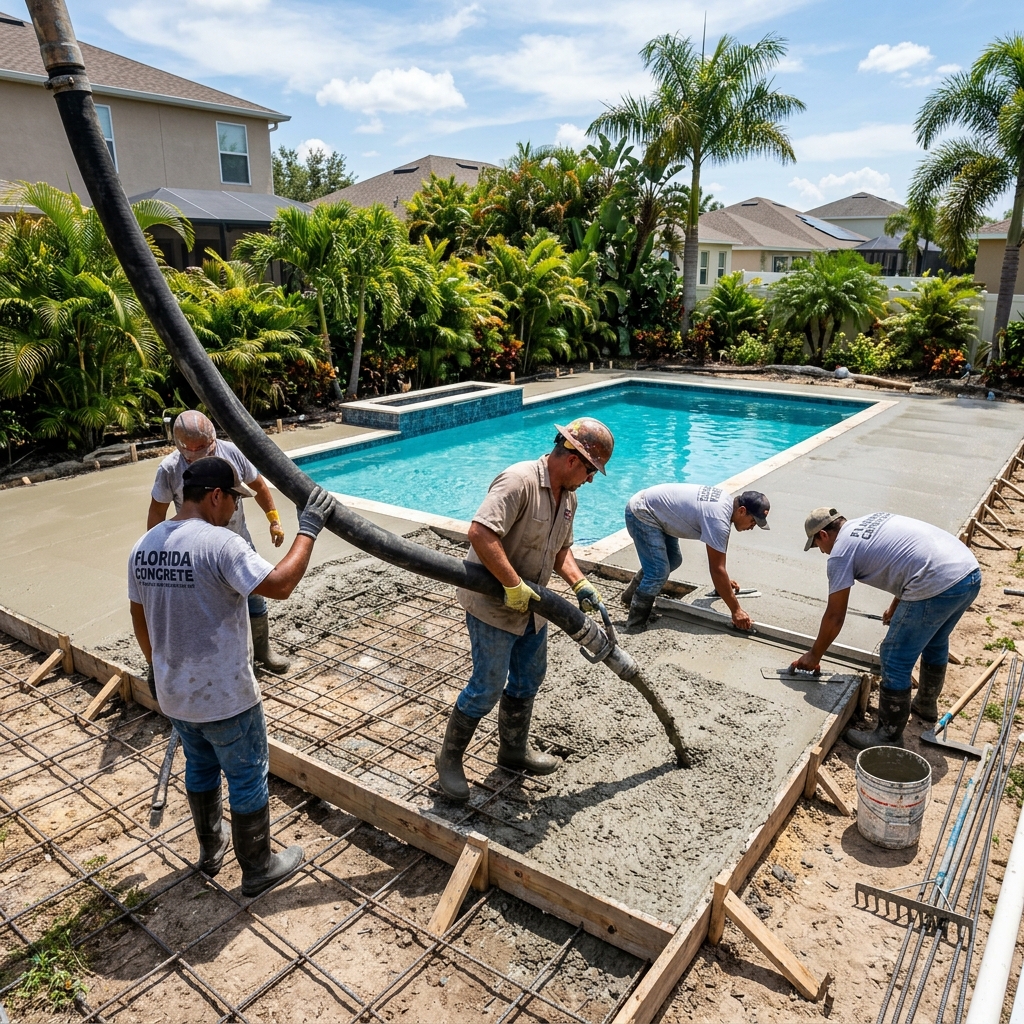
Poured pool decks demand rapid, continuous delivery. Ready-mix trucks start heating up the moment they leave the plant. If you choose to chute into wheelbarrows and run concrete along a narrow side gate manually, you face two immediate crises: **rapid setting times under the Florida sun** and **cold joints** between pours.
Ground-line trailer pumps eliminate these bottlenecks. A single operator routes a flexible line to the deck zone, delivering up to 35 yards of pea-gravel mix per hour. The placing crew gets the concrete continuously, allowing them to screed and finish a perfectly level apron before the hot afternoon sun starts cooking the mud.
Data based on typical residential backyard pool deck pours in Duval County, targeting a standard 3000 PSI concrete mix with 3/8" max aggregate.
Jobsite Dispatch & Engineering Records
True authority is documented, not claimed. Explore the active logistics mapping, pea-gravel slump metrics, and crew chat logs that ensure zero lawn and property damage on Northeast Florida home sites.
Residential Backyard Staging Blueprint
Drawing Ref: PM-LINE-RES-POOL
This rigging blueprint details Ground-Line trailer pump staging on standard residential sites. Heavy transit mixers represent massive axle weights that easily crack residential driveway aprons and compact delicate turf. Pumping eliminates this risk entirely by staging at the public roadway.
By running flexible 2-inch rubber hoses manually through narrow 36-inch side-yard fence gates, we ensure the placing crew reaches the backyard pool deck excavation continuously and at high velocity. No heavy machinery ever makes contact with your soil or landscaping.
Argos Pea-Gravel Mix Field Quality Sheet
| Arrival | Test Type | Target Slump | Measured Slump | Mix Correction & Admixture | Temp | Pumping Status |
|---|---|---|---|---|---|---|
| 07:45 AM | Truck #1 Initial Slump | 4.50 Inches | 3.50 Inches | Added 30 oz/yd³ High-Range Water Reducer (HRWR). Spun 30 revs. No water added. | 81°F | APPROVED FOR SLICKLINE |
| 08:10 AM | Truck #2 Hopper Slump | 4.50 Inches | 4.50 Inches | None (Mix within structural pumping tolerances) | 82°F | APPROVED FOR SLICKLINE |
| 08:35 AM | Truck #3 Continuous Flow | 4.50 Inches | 4.25 Inches | None (Continuous pumping completed continuously) | 83°F | POUR COMPLETE |
*All field adjustments executed in strict compliance with ACI 301 structural concrete specs and FDEP environmental guidelines. HRWR superplasticizer used exclusively to adjust slump without compromising the structural water-cement design ratio. No jobsite water addition permitted to prevent shrinkage cracks.
Live Jobsite Dispatch Chat Log
Real-time SMS/Radio transceivers among the placing supervisor, operator, and ready-mix plant dispatcher during residential backyard operations.
The 36-Inch Gate Access Rule
Backyard access is the single biggest logistical bottleneck on Northeast Florida pool projects. Privacy fences in suburbs like Fleming Island, Mandarin, and Ponte Vedra typically use standard 36-inch walk gates. A standard concrete buggy or ready-mix truck cannot pass through these openings without tearing down entire sections of fence.
Our flexible 2-inch rubber hoses slide easily through a 36-inch opening. If your gate clearance is slightly borderline (between 35.5 and 36 inches), popping the hinge pins or removing the latch striker plate will usually clear the path. We manually hand-route the hoses along the side lawn, ensuring zero turf disturbance.
Pea-Gravel Mix Design Requirements
Ground-line pumps route slurry through high-pressure pipelines that reduce from 4-inch cylinders down to 2-inch flexible hoses. Because of this steep reduction coefficient, you **cannot pump standard coarse aggregate concrete** (which typically contains 1-inch or 1.5-inch stones).
We require ready-mix providers to supply a sieved **3000 PSI Pea-Gravel mix (using 3/8-inch max aggregate)**. Pea-gravel aggregates slide past the pipeline transitions without bridging, avoiding immediate line blocks. Always coordinate with your batch plant dispatch the night before to confirm they are shipping a pump-compatible pea-gravel mix.
Pool Site Prep & Washout Guidelines
Ensuring the site is prepared before the pump operator arrives prevents standby fees from transit mixers and avoids EPA violations on the jobsite.
Measure Gate Hinge Width
Verify a clear 36-inch gate opening from fence post to post. Be sure to account for gate latch hooks, strike plates, and hinge bolts that eat into active clearance.
Designate Containment Bag
Set up a heavy-duty commercial concrete washout bag or framed plastic-lined pit near the curb staging apron. We do not washout into sandy soil or open gutters.
Staging Space Clearance
Mark out approximately 30 linear feet of street curb space near the home entrance to allow safe staging for the trailer pump and backing ready-mix trucks.
Confirm Pea-Gravel Sieving
Ensure your concrete supplier's batch ticket reads 3000 PSI with 3/8" pea gravel. Stiffer structural mixes will immediately clog standard 2-inch hoses.
Pool Deck FAQ
Questions from Jacksonville pool builders, finishers, and homeowners before scheduling their ground line pump dispatch.
Talk to Dispatch